
Water
When water becomes a production quota
In rationed regions, water availability can place a direct ceiling on how much food can be grown.
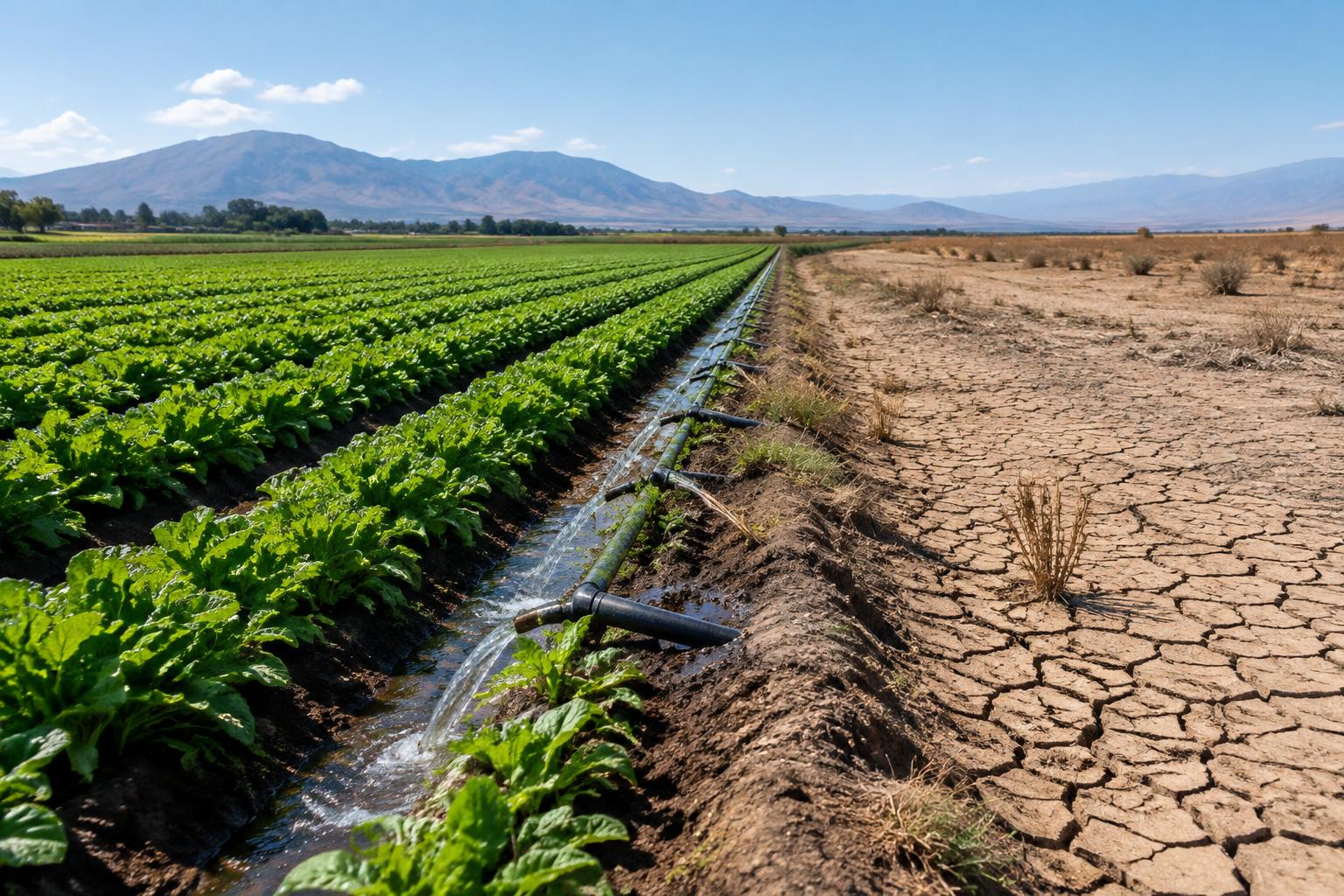
For many growers, water can no longer be taken for granted. Allocations from rivers and reservoirs may be cut, wells may face pumping limits, and irrigation days may be regulated. When each farm receives a fixed allocation, water effectively becomes a production quota.
Priorities under scarcity
Growers must decide which fields and crops receive water. High-value and perennial crops are often prioritised while other land is idled. This may protect short-term farm economics, but it means less food from the region and greater market vulnerability.
More value from each allocation
When the quota cannot increase, productivity per litre must. Precise scheduling, leak control, stronger soil structure and technology that makes water more available to plants can create greater room to operate within the same allocation.
Consequences beyond the farm
Many water-constrained regions supply fruit, vegetables, nuts and grain to large markets. Lower output can affect prices, processing businesses and employment far beyond the region. Water efficiency is both a farm measure and a food-security concern.
Resilience before the next drought
Investment in better water use also has value in normal years. It can lower costs and build experience before scarcity returns. When restrictions arrive, the grower is better prepared to maintain production with less available water.